
shell
ผู้เยี่ยมชม
benducket3211@gmail.com
Difference Between 4130 and 4140 Steel? Complete Guide to Alloy Steel Strength and Seamless Steel Pipe Applications (4 อ่าน)
21 พ.ค. 2569 03:32
Understanding the difference between 4130 and 4140 steel is essential for manufacturers, engineers, and industrial buyers who work with high-performance alloy steels. Both materials belong to the chromium-molybdenum steel family, commonly known as chromoly steel. These alloy steels are widely used in aerospace, automotive, construction, oil and gas, heavy machinery, and seamless steel pipe manufacturing because of their exceptional strength, toughness, and reliability.
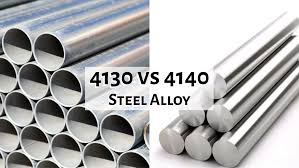
Although 4130 steel and 4140 steel contain similar alloying elements such as chromium and molybdenum, the major distinction lies in their carbon content. 4130 steel contains approximately 0.30% carbon, while 4140 steel contains around 0.40% carbon. This small increase in carbon significantly affects hardness, tensile strength, wear resistance, and heat-treatment performance.
4130 alloy steel is known for its excellent balance between strength and weight. It offers high durability while remaining relatively lightweight and easy to fabricate. Because of its lower carbon content, 4130 steel provides outstanding weldability and flexibility, making it suitable for aircraft tubing, race car chassis, bicycle frames, structural tubing, and industrial fabrication projects.
4140 steel, on the other hand, is engineered for applications requiring greater hardness and mechanical strength. The higher carbon percentage improves hardenability and wear resistance, allowing the material to perform effectively under heavy mechanical loads and harsh industrial conditions. Industries often use 4140 steel for gears, crankshafts, industrial shafts, hydraulic tools, and heavy equipment components.
Both alloy steels deliver superior performance compared to ordinary carbon steel. Their chromium and molybdenum content improves corrosion resistance, fatigue strength, and overall structural integrity. As a result, both 4130 and 4140 steel continue to play a critical role in modern engineering and seamless steel pipe production.
Mechanical Strength and Heat Treatment Differences
One of the most important factors when discussing the difference between 4130 and 4140 steel is their mechanical strength and heat-treatment capability. While both materials can be heat-treated for improved hardness and durability, 4140 steel generally achieves higher hardness levels because of its greater carbon concentration.
4130 steel is highly valued for its excellent strength-to-weight ratio. It offers strong tensile strength while maintaining good ductility and toughness. This combination makes it ideal for applications where lightweight construction and structural reliability are equally important. Industries such as aerospace and motorsports prefer 4130 chromoly steel because it reduces overall weight without sacrificing mechanical performance.
Another major advantage of 4130 steel is its superior weldability. The lower carbon content minimizes the risk of cracking during welding and heat treatment. Manufacturers can easily fabricate seamless steel pipe systems, pressure vessels, and custom structural components using 4130 alloy steel with fewer processing complications.
4140 steel delivers significantly higher hardness and wear resistance after heat treatment. The alloy responds exceptionally well to quenching and tempering processes, resulting in superior surface hardness and mechanical durability. Because of this, 4140 steel is often selected for high-load industrial applications where components experience continuous stress, friction, and impact.
The increased hardness of 4140 steel also improves fatigue resistance and abrasion performance. Mechanical components such as gears, drive shafts, spindles, and tooling systems benefit greatly from these characteristics because they operate under severe industrial conditions. However, the higher carbon content makes 4140 steel slightly more difficult to weld and machine compared to 4130 steel.
Machinability differences also influence material selection. 4130 steel is easier to machine, shape, and fabricate, especially before heat treatment. In contrast, hardened 4140 steel requires more advanced machining processes because of its increased toughness. Despite this challenge, many manufacturers prefer 4140 steel because of its long service life and exceptional industrial performance.
Industrial Applications and Manufacturing Uses
The industrial applications of 4130 and 4140 steel vary according to the performance demands of specific engineering projects. Both materials are trusted alloy steels, but each one is better suited for particular environments and operational requirements.
4130 steel is commonly associated with aerospace and lightweight structural applications. Aircraft manufacturers frequently use 4130 seamless steel tubing for fuselage structures, landing gear components, and airframe assemblies because of its excellent strength-to-weight ratio. The automotive racing industry also relies heavily on 4130 chromoly steel for roll cages, suspension systems, and performance chassis construction.
Construction and industrial fabrication sectors benefit from the flexibility and weldability of 4130 steel. Structural frames, pressure vessels, and lightweight industrial tubing systems often use this material because it combines durability with efficient fabrication properties.
4140 steel is primarily used in industries requiring extreme strength, wear resistance, and long-term mechanical reliability. Heavy equipment manufacturers, mining companies, oilfield operations, and industrial machinery producers depend on 4140 alloy steel for high-stress components exposed to continuous impact and pressure.
Industrial shafts, crankshafts, hydraulic cylinders, gears, drilling tools, and power transmission systems commonly use 4140 steel because of its superior hardness and fatigue resistance. These applications demand materials capable of maintaining structural integrity under harsh operating conditions and heavy mechanical loads.
Seamless steel pipe manufacturing also benefits from both materials depending on application requirements. 4130 steel pipe is preferred for lightweight structural and aerospace applications, while 4140 steel pipe is often selected for heavy-duty industrial environments where higher wear resistance is essential.
Cost considerations may also influence the choice between these two alloy steels. In many cases, 4130 steel offers lower processing costs because it is easier to weld and machine. However, 4140 steel can provide better long-term value in industrial settings because of its superior durability and reduced maintenance requirements.
Conclusion
The difference between 4130 and 4140 steel comes down to carbon content, hardness, weldability, and industrial performance. 4130 steel is widely recognized for its lightweight structure, excellent weldability, and strong strength-to-weight ratio, making it ideal for aerospace engineering, automotive fabrication, and seamless steel pipe applications requiring efficient structural performance.
4140 steel stands out for its exceptional hardness, wear resistance, and high-load durability. Its superior mechanical strength makes it the preferred material for gears, industrial shafts, heavy machinery, and demanding engineering environments where maximum performance and long-term reliability are essential.
43.242.177.201
shell
ผู้เยี่ยมชม
benducket3211@gmail.com